The Two-Part Pour
Pouring a pint of Guinness is a two-stage job: a main pour, a pause while the surge settles, and a slow top-up. Guinness itself puts the whole ritual at 119.5 seconds. Whether or not anyone is timing it, the pause in the middle is the part that matters.
What You'll Need
- A properly maintained draft Guinness tap
- A clean, dry Guinness tulip glass (20oz/568ml)
- Patience
The Pour: Step by Step
Step 1: Hold the Glass at 45 Degrees
Hold the tulip glass at a 45-degree angle just below the tap, with the spout close to the inside of the glass. This keeps turbulence down and gives you a smoother pour.
Pro Tip
A wet or greasy glass will spoil the head. Use a clean, dry glass that has been rinsed with cold water and allowed to air dry.
Step 2: Pull the Tap Handle Fully Forward
Pull the handle all the way towards you in one smooth motion. Half-pulls give an inconsistent pour.
Step 3: Fill to Three-Quarters
Let the Guinness run down the inside of the glass until it is roughly three-quarters full, straightening the glass to vertical as it fills.
Step 4: Let It Settle
Put the glass down and leave it. The surge settles from the bottom up, leaving a clear line between the dark body and the cream-coloured head. This takes a minute or two.
Step 5: Top It Off
Once the surge has settled, push the handle away from you for the slow pour and fill until the head rises just above the rim. It should dome slightly without spilling.
Step 6: Serve
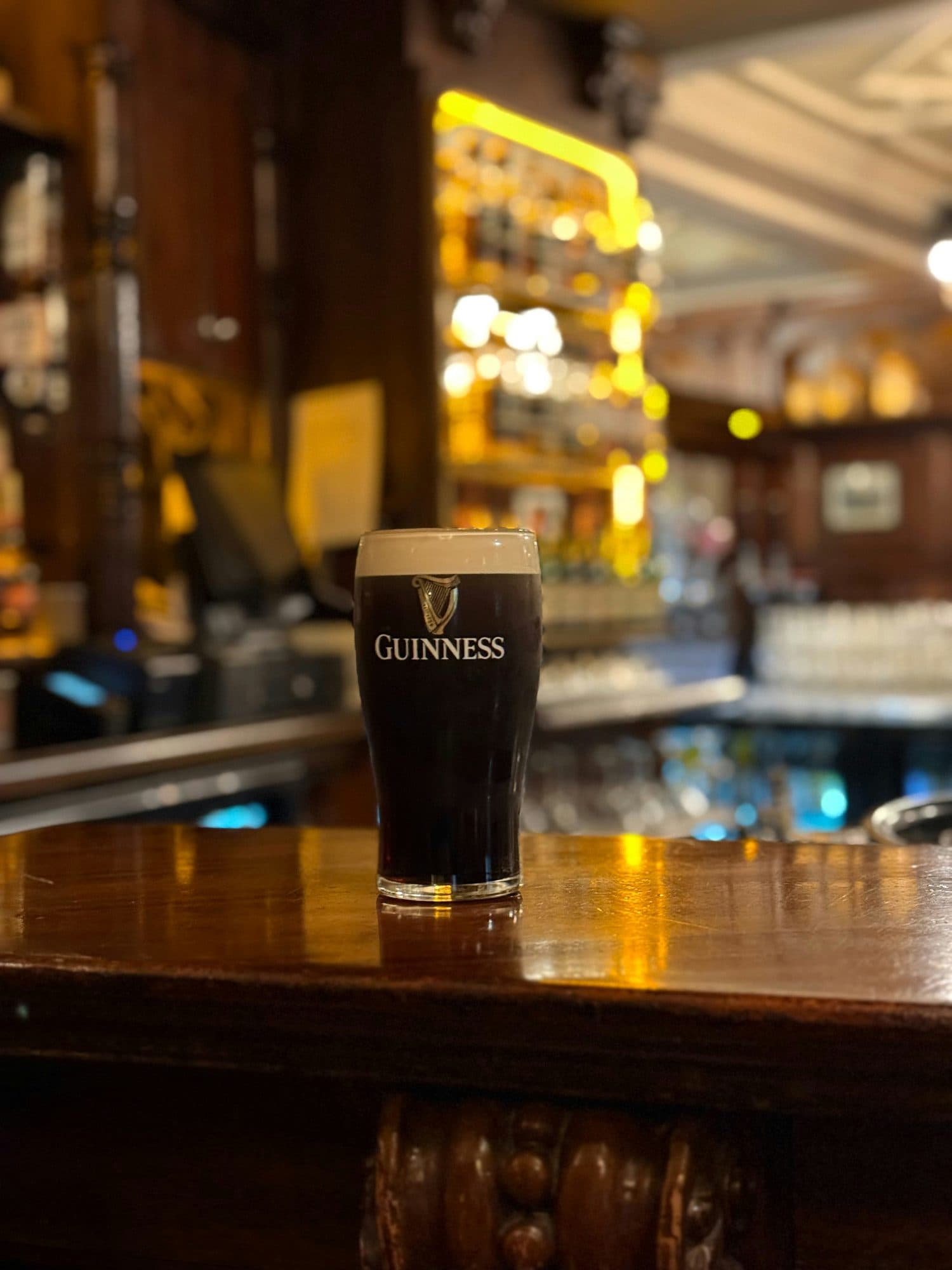
A good pint has a creamy, smooth head roughly 1–2cm thick, dense enough to hold a mark if you draw on it.
Why Two Parts? Nitrogen and the Cascade
The reason Guinness needs a rest in the middle is the gas. Guinness began using nitrogen in 1959, and nitrogen bubbles are much smaller than carbon dioxide bubbles. That is what gives Guinness its smooth texture and the slow, cascading settle you see after the first pour.
During the pause the bubbles in the body settle out and the head forms and firms up. Topping up too early pushes fresh beer into a head that has not finished forming, which is why a rushed pint looks thin and patchy on top.
About the 119.5 seconds
The 119.5-second figure is Guinness's own number for the two-part pour, and Diageo's guidance is that the pour should take about two minutes. It is a brand standard rather than a laboratory result, so treat it as "give the pint time to settle" rather than a precise requirement.
The Cascade
When Guinness is poured, bubbles near the glass wall appear to move downwards while the body settles. Bubbles in the centre rise, and the liquid near the walls is dragged down with them in a circulating pattern. It looks like the beer is falling into itself, and it stops once the head has formed and the body has gone still.
Temperature
Draught Guinness is meant to be served at 6–7°C, with Extra Cold served at about 3.5°C. A glass straight from the freezer or a warm cellar will both change how the head forms.
Common Mistakes
- The one-pour: filling the glass in a single go with no settle. It produces a thinner, uneven head.
- Pouring too fast: excessive foam and a ragged head.
- Not letting it settle: topping up before the surge has finished.
- Using a warm or dirty glass: affects temperature and head retention.
- Overfilling: the head should dome, not overflow.
- Drawing on the head: a shamrock drawn into the top-up is a bit of fun, but it does nothing for the pint and fades within seconds.
Warning
If your local pours Guinness in one go, it is not being poured the way Guinness says it should be. The two-part pour is the standard.
The Perfect Pint Checklist
- The body is deep, dark ruby-black
- The head is creamy white, not yellowed, and roughly 1–2cm thick
- There is a clean line between the body and the head
- The first sip leaves foam lacing (schtick) on the glass
Canned Guinness Is Different
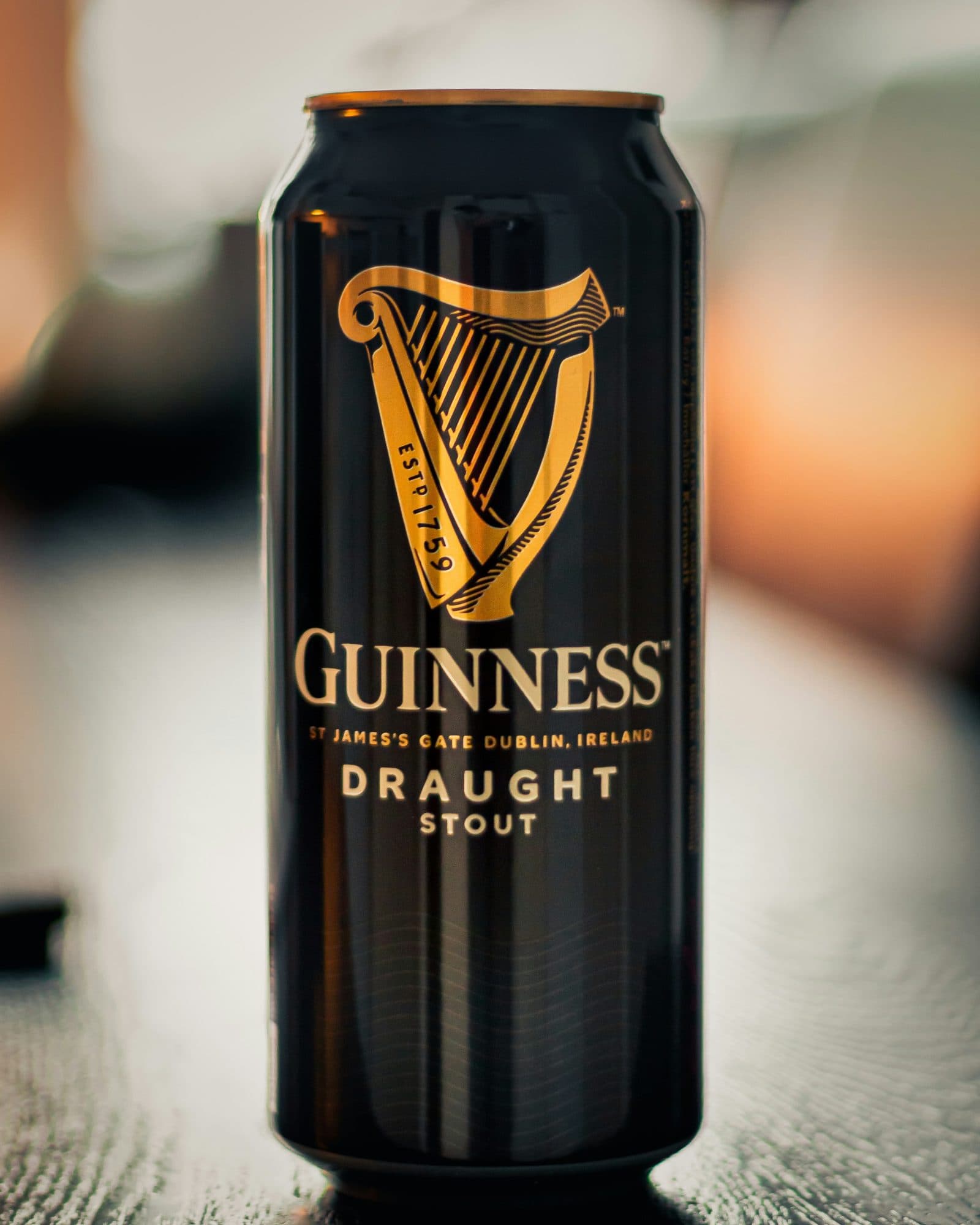
At home the widget in a can does the nitrogen work for you, but the technique is not identical to draft. Read our guide to pouring canned Guinness for the widget-specific steps.
Practice Makes Perfect
If you are pouring at home from a keg or a NitroSurge can, expect the first few to be learning experiences. Same angle, same speed, same patience, every time.
The easiest way to see a good pour is to watch one. Browse the community-rated Guinness pubs near you and look for the ones scoring well on Head.
Sources
- Diageo: Guinness — the 119.5-second two-part pour
- Wikipedia: Guinness — 1959 nitrogen, smaller bubbles, "should take two minutes", serving temperatures
Now that you know how to pour the perfect pint, learn how to tell whether the pint in front of you is a good one.